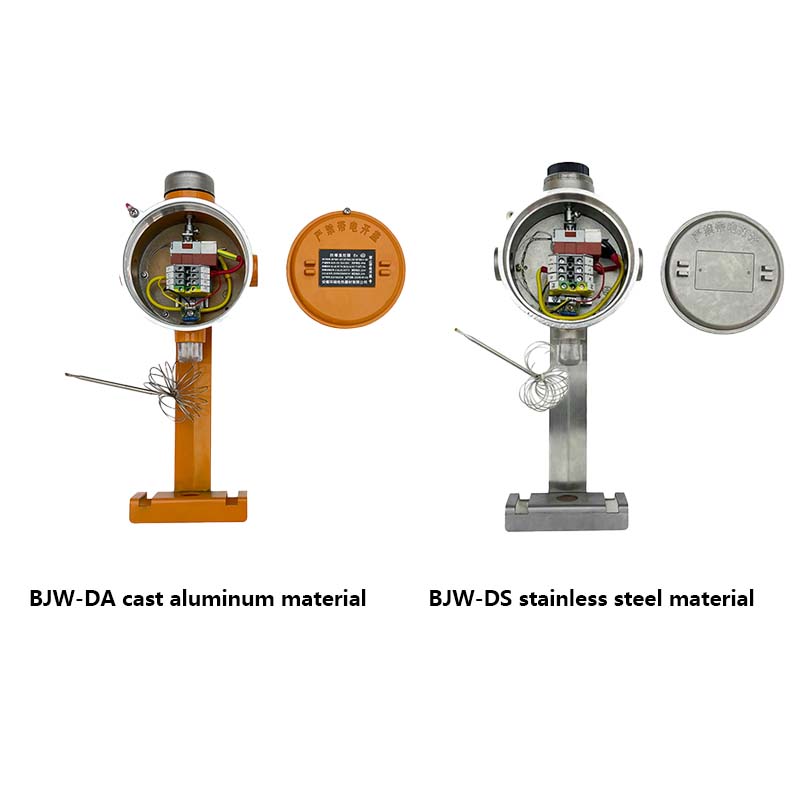

The BJW-DA/DS type explosion-proof temperature controller uses a mechanical temperature controller as its core component, primarily based on the thermal expansion and contraction characteristics of a bimetallic strip, combined with a mechanical contact switch to achieve temperature control. It features a simple structure, high reliability, and is suitable for basic temperature control scenarios, specifically designed for temperature monitoring and control in industrial environments. It is explosion-proof, corrosion-resistant, and highly stable, making it suitable for applications requiring explosion protection, such as those in the petroleum, chemical, and pharmaceutical industries.
Technical Data
|
|
Instructions for Use
1. Installation Precautions
Environmental Requirements: Avoid strong magnetic fields and severe vibration environments.
Wiring Specifications: Ensure power is disconnected before wiring. Wires must be connected via explosion-proof sealed connectors.
Temperature Probe: Must be in direct contact with the measured medium or in close contact with the pipe/tank surface to ensure good thermal conductivity.
2. Temperature Setting
Method Open the top cover of the temperature controller and rotate the knob. Observe the dial indicating the target temperature value (e.g., 20°C).
When the medium temperature reaches the set value, the temperature controller automatically cuts off/connects the circuit (depending on the normally open/normally closed model).
3. Calibration and Maintenance
Regular Calibration: It is recommended to perform calibration every 12 months using a standard thermometer. If the error is too large, the device needs to be returned to the factory for adjustment.
Cleaning and Maintenance: Wipe the outer casing with a soft cloth. Do not use strong acid or alkali cleaners.
To determine if a temperature control element is functioning correctly: Connect the multimeter to the "L" and "L1" contacts in resistance mode. Rotate the temperature control knob from low to high. If you hear a "pop" sound as the contacts open and close near the temperature scale (with the temperature bulb in the air), and the multimeter needle changes from "off" to "on," then it is normal. If the needle does not move, the temperature control element is faulty.
 IPv6 network supported




leave a message
Scan to Wechat :
Scan to WhatsApp :