
leave a message
If you are interested in our products and want to know more details,please leave a message here,we will reply you as soon as we can.


Winter low temperature can easily freeze the static water inside fire protection pipes and water tanks, resulting in pipe blockage and cracking, which will directly hinder fire water supply in case of fire. The electric heat tracing system is a mainstream solution for freeze protection and thermal insulation of fire water supply facilities. The selection shall be comprehensively determined according to working conditions, environmental conditions and specification requirements.
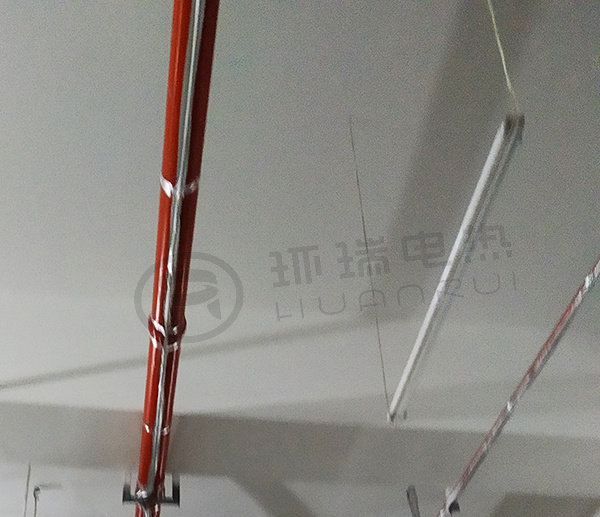
Basic Temperature Requirements for Heat Tracing of Fire Protection Pipes
According to water supply design codes, the water temperature inside fire protection water supply pipes should not be lower than 4℃, and the conventional design maintenance temperature in engineering projects is 5℃. The main goal is to prevent water inside pipes from freezing, rather than high-temperature heating. The selection shall compensate the heat loss of pipes, valves and fire hydrants to keep the medium temperature above freezing point.
Selection of Heating Cable Types
Low-temperature self-regulating heating cable is the first choice for fire pipelines in ordinary garages, indoor and outdoor areas without explosion-proof requirements. The PTC material of self-regulating cable can adjust output power automatically. It can be cut on site and allows partial overlapping without local overheating. Temperature controllers are not mandatory under normal conditions, which simplifies installation.
For long-distance fire pipelines in tunnels, self-regulating cables are limited by maximum circuit length and require numerous circuits for installation. Series constant-wattage heating cable is an alternative. For fire pipes in hazardous areas with flammable and explosive media, heating cables and matching accessories with explosion-proof certification must be adopted.
Self-regulating heating cables with metal shielding braid and reinforced outer jacket are recommended for fire water tanks and pipes in humid outdoor environments. The metal braid provides earthing protection, mechanical resistance and moisture-proof performance, suitable for open-air and high-humidity sites to improve system safety.
Site Parameters Required for Selection
Multiple site parameters need to be collected in the selection phase, including application scenario, pipe diameter, total pipe length, quantity of valves, flanges and fire hydrants, local minimum ambient temperature, material and thickness of thermal insulation layer, and whether the site is a hazardous area with explosion-proof and anti-corrosion requirements.
Heat loss calculation based on all above parameters is required to confirm power rating, model and total length of heating cables.
The full freeze protection system consists of heating cable, power connection box, end sealing kit, tee / straight joints, fixing tapes, power distribution box, residual current protection devices, thermal insulation and outer cladding. Explosion-proof junction boxes, cable glands and other certified accessories are required for hazardous areas.
Key Installation Specifications
Heating cables can be laid straight or spirally wrapped on the outer pipe surface, preferably at the 45° lower side of the pipe. Use aluminum foil tape or polyester pressure-sensitive tape for fixing; steel wire binding is forbidden. Reserve sufficient cable allowance at elbows, valves and hydrants to meet the minimum bending radius. Warning labels shall be pasted every 3~6 meters outside insulation.
Valves, flanges and fire hydrants are high heat loss points. Extra tracing length for these parts must be calculated to avoid local freezing.
After installation, check cable jacket integrity and firm fixing; test insulation resistance and circuit continuity; verify circuit breakers and residual current devices inside distribution boxes. For explosion-proof sites, inspect sealing performance of junction boxes. Power-on operation can only start after all tests pass.
System Maintenance and Explosion-proof Notes
After commissioning, regularly inspect insulation integrity, aging and damage of cable outer jacket; check sealing of junction boxes and pay special attention to water ingress in humid areas; test electrical protection devices and keep maintenance records. Shut down and troubleshoot immediately if abnormal current occurs.
For fire pipes in hazardous areas, all accessories of the whole heat tracing system shall hold corresponding explosion-proof certifications. Power junction boxes, end seals, cable glands and distribution boxes must match the explosion-proof class. Explosion-proof cable alone cannot meet safety specifications.
Self-regulating heating cables have maximum circuit length limits. Long tunnel pipelines will need a large number of separate circuits, increasing construction work. Series constant-wattage heating cable can reach thousands of meters per circuit, which fits long tunnel pipelines. The power rating shall be calculated according to pipe heat loss.
 IPv6 network supported





leave a message
Scan to Wechat :
Scan to WhatsApp :