
leave a message
If you are interested in our products and want to know more details,please leave a message here,we will reply you as soon as we can.


As an important part of transportation hubs, the reliability of fire protection systems in tunnels is directly related to emergency response and personnel safety. The tunnel features a complex internal environment with low temperatures, high humidity and limited ventilation in cold seasons. These conditions can easily freeze fire protection pipes and disable the sprinkler system. With precise temperature control, moisture and corrosion resistance and intelligent management, electric heat-tracing cables are the preferred technical solution for freeze protection and thermal insulation of tunnel fire pipes.
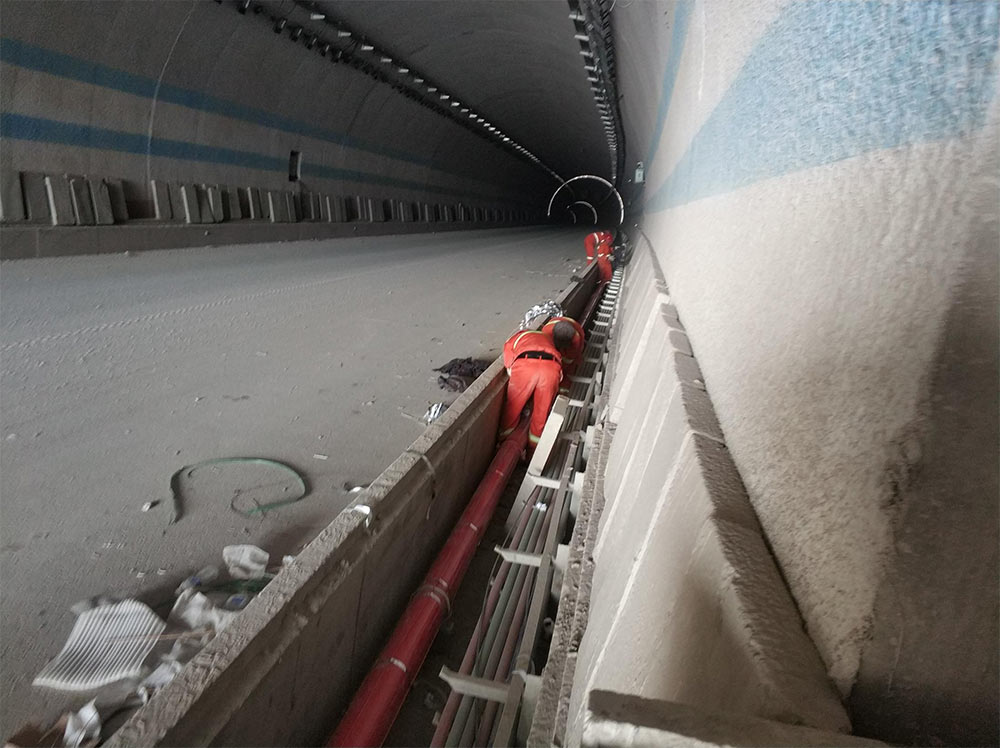
Why Use Electric Heat-Tracing for Tunnel Fire Protection Pipes?
Mandatory Freeze Protection under Extreme Low Temperatures
There is a remarkable temperature difference between the inside and outside of tunnels. In cold regions, the temperature can drop to -30℃ in cold seasons. Fire protection pipes are mostly filled with static water. Especially at tunnel entrances, exits and air vents, strong air exchange causes rapid heat loss. Static water inside pipes tends to freeze, leading to pipe rupture and jamming of valves and fire hydrants. The electric heat-tracing system continuously compensates heat to keep the medium temperature inside pipes no lower than 5℃, ensuring the sprinkler and hydrant systems can discharge water immediately in case of fire.
Avoid Secondary Maintenance for Concealed Works
Most tunnel fire protection pipes are laid along tunnel arches and side walls, and some pipelines are embedded in lining structures, which are typical concealed works. Once the pipes freeze and leak, repairs require breaking tunnel linings and closing traffic lanes. This brings extremely high maintenance costs and long traffic interruption. Electric heat-tracing prevents frost damage at the source, greatly reducing emergency repair frequency and operation and maintenance workload.
Adapt to High Humidity and Corrosive Environment
Tunnels maintain high humidity all year round with condensate water and exhaust condensate. Traditional rock wool insulation materials easily absorb moisture, resulting in rapid deterioration of thermal performance and accelerated corrosion of metal pipes. The matched electric heat-tracing cables adopt waterproof and corrosion-resistant sheath materials with stable insulation performance. They are suitable for humid tunnels with corrosive exhaust gas and guarantee long-term stable operation of the system.
Key Points for Selection of Heat-Tracing Cables
1. Product Type Selection
Self-regulating heating cables are preferred for freeze protection of tunnel fire pipes. They automatically adjust output power according to ambient temperature without overheating risk, even when laid at pipe intersections. For long-distance main pipes with large diameters, constant-wattage heating cables can also be selected and matched with temperature controllers to maintain stable constant temperature. If the tunnel is located in a hazardous explosive area, explosion-proof electric heat-tracing components shall be equipped.
2. Protection Class and Structural Requirements
The sheath of heating cables is preferably modified polyolefin or fluoroplastic with hydrolysis resistance and aging resistance, featuring high waterproof performance, mildew resistance and exhaust corrosion resistance. Matching junction boxes, power boxes and end termination kits meet IP66 or higher protection class to adapt to the condensate-rich environment in tunnels.
3. Temperature Control Configuration
Temperature controllers can be equipped to monitor pipe wall or ambient temperature and set start-stop thresholds for automatic operation and energy saving. Long tunnels can adopt zoned independent temperature control. Higher heat-tracing power is applied at cold tunnel entrances and exits, while lower power is used in relatively warm middle sections of tunnels to realize refined zoned management.
Construction and Installation Specifications
1. Laying Method: Electric heat-tracing cables are attached parallelly or spirally along the outer wall of pipes and closely fitted to pipe walls for efficient heat transfer. Extra cable length shall be reserved for fittings such as valves, flanges and fire hydrants for key freeze protection to prevent freezing points at fittings.
2. Fixing Method: High-temperature resistant pressure-sensitive adhesive tape is used to fix heating cables. Metal ties shall not directly bind and damage the outer sheath. After cable laying, insulation layers and outer protective layers are wrapped in sequence to reduce heat loss and protect cables from dust and mechanical impact inside tunnels.
3. Electrical Construction: Power junction boxes and temperature probes shall be installed away from water accumulation areas. All joints shall be sealed and waterproofed. The whole system shall be fitted with leakage protection and earthing protection to comply with electrical codes for tunnel fire protection.
Operation, Maintenance and Safety Notes
- Regular Inspection: Focus on checking heat-tracing circuits and joints at tunnel entrances and exits for damage and water ingress, as well as normal operation of temperature controllers.
- System Test: Conduct power-on test of the whole electric heat-tracing system before the arrival of cold seasons to verify heating performance and temperature control actions.
- No Unauthorized Modification: Do not arbitrarily cut or splice heating cables, and insulation layers shall not be removed without permission to avoid system failure.
Freeze protection and thermal insulation of tunnel fire protection pipes is far more than a seasonal project. It is continuous safety guarantee for lives. Through proper product selection, standardized construction and intelligent control, electric heat-tracing systems build an invisible temperature barrier for tunnel fire pipe networks and ensure reliable water supply for fire emergency response.
 IPv6 network supported





leave a message
Scan to Wechat :
Scan to WhatsApp :